
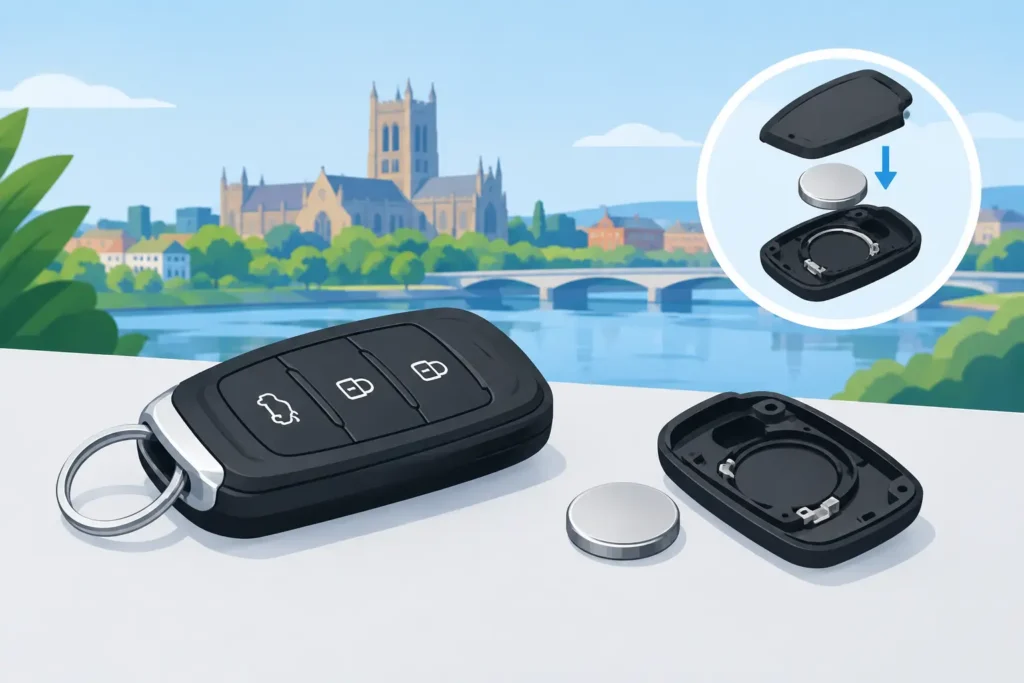
A key fob can appear to fail without warning. You press the button outside your home, workplace or supermarket car park and nothing happens. For key fob battery replacement in Doncaster, the first job is to establish whether the battery is truly the problem – because a weak remote battery, damaged fob, lost synchronisation and an immobiliser fault can produce similar symptoms.
Don’t panic or force your way into the vehicle. Many cars still have a mechanical emergency key concealed inside the fob, and a trained automotive locksmith can check the remote, vehicle access and starting system without causing damage. A quick mobile diagnosis can save you from buying the wrong battery or assuming you need an expensive new key.
When does a key fob battery need replacing?
The most common sign is a steadily reducing operating range. You may need to stand close to the driver’s door before the central locking responds, or press the button more than once. Some vehicles show a key battery warning on the dashboard or infotainment screen, while others give no warning at all.
A remote that works intermittently can also point to a weak battery. Cold weather may make the problem more noticeable, as battery performance can drop in lower temperatures. If the fob has been dropped, got wet or has a loose casing, however, the battery may not be the only issue.
Modern proximity and smart keys deserve particular care. These fobs communicate with the vehicle differently from a basic remote, and some need a precise battery type and correct fitting to work reliably. The vehicle may still start when the fob is held against a designated emergency reader point, but that does not mean the issue should be ignored.
Key fob battery replacement in Doncaster: what happens on site
A mobile automotive locksmith comes to your home, place of work, roadside location or wherever the vehicle is parked. This avoids arranging a main-dealer appointment, finding transport while your car is unusable or taking time away from work simply to have a small but vital part checked.
The fob is examined before it is opened. A professional will identify the correct battery specification, open the casing with suitable tools and inspect the contacts for corrosion, damage or poor connection. The replacement battery is fitted carefully, then the remote is tested for locking, unlocking, boot release and other relevant functions.
For many standard remote fobs, fitting a battery does not erase the programming. Still, it depends on the vehicle and the condition of the fob. If the battery has leaked, the circuit board is damaged or the remote was already failing, a fresh battery alone will not restore it. Testing the key before and after the work gives a clear answer rather than a guess.
If the fob will not communicate after replacement, diagnostic equipment can help identify whether it needs reprogramming, repair or replacement. On suitable vehicles, these services can be completed on site, including remote-fob programming and cutting a replacement emergency blade where required.
Why the correct battery and fitting method matter
Button-cell batteries look similar, but they are not all interchangeable. A battery with the wrong thickness, voltage or contact arrangement may fit loosely, fail quickly or stop the remote working altogether. Fitting it upside down is an easy mistake when changing a battery in poor light or in a hurry.
There is also a risk of damaging the casing. Some fobs have hidden clips, delicate internal tabs or a separate transponder chip that must remain in place. A cracked case can let in moisture, while a missing transponder can leave you with a remote that operates the locks but will not start the car.
Cheap, old-stock batteries are another false economy. A reputable replacement should be the correct type and fitted cleanly, with the fob checked afterwards. If your key casing is worn, split or no longer holds the battery securely, replacing or repairing the casing at the same visit can prevent another failure a few weeks later.
Battery fault or a bigger key problem?
Not every unresponsive fob has a flat battery. If a new battery makes no difference, common causes include worn button switches, damaged solder points, water ingress, a cracked circuit board or a fault with the vehicle receiver. A car battery that is very low can also affect central locking and keyless entry behaviour.
There is an important distinction between the remote and the immobiliser chip. The remote controls conveniences such as locking and unlocking. The transponder chip confirms to the vehicle that an authorised key is present before it allows the engine to start. Depending on the make and model, one part can fail while the other continues to work.
For example, you may be able to unlock the car with the emergency blade but find it will not start. Equally, the vehicle may start but the remote buttons do nothing. A proper assessment avoids replacing parts that are not at fault and helps protect the vehicle’s security system.
Can you replace the battery yourself?
If you know the exact battery type, have a sound fob and can open it without prising or forcing the casing, a straightforward replacement is often possible. Use a clean, dry surface and keep the internal components in the same position. Avoid touching the new battery faces unnecessarily, and make sure the positive and negative sides match the markings inside the fob.
DIY is less advisable if the case is damaged, the key is a smart or proximity fob, the battery has leaked, or the remote has stopped working completely. It is also sensible to get help if your only key is involved. Breaking the case or losing a transponder chip when you have no spare can quickly turn a small maintenance job into a no-start situation.
Never leave small button-cell batteries where children or pets can reach them. Used batteries should be disposed of responsibly through an appropriate battery recycling point, not left loose in a drawer or thrown into general waste.
Avoid being caught out by a failing fob
A spare working key is one of the simplest ways to reduce disruption. It gives you a fallback if a battery fails, a fob is damaged or your main key is lost. For families sharing a car, tradespeople carrying tools and drivers who rely on their vehicle for deliveries or commuting, a spare key can prevent a minor fault becoming a missed day of work.
It is worth checking both keys occasionally, rather than discovering the spare has a flat battery when you need it most. Keep the fob dry, avoid heavy keyrings that strain the ignition area on older vehicles, and arrange a casing repair before exposed electronics become water damaged.
Fast local help when the key still will not work
If you are locked out, the key is lost, the remote has failed completely or the car will not recognise the fob, call for assistance rather than attempting to force the door or dismantle the key further. Prestige Line LTD provides 24/7 mobile automotive locksmith support across Doncaster and South Yorkshire, using non-destructive entry methods, specialist key-cutting equipment and diagnostic tools where required.
Upfront pricing and an on-site assessment mean you can understand the fault and the available repair or replacement options before work begins. Whether the answer is a fresh battery, fob repair, programming or a replacement key, the aim is the same: get you safely back into your vehicle and moving again.
A weak key fob battery is easy to overlook until the moment you need the car. If the range has dropped or the buttons have become unreliable, dealing with it now is usually quicker, calmer and far less disruptive than waiting for a complete failure.