
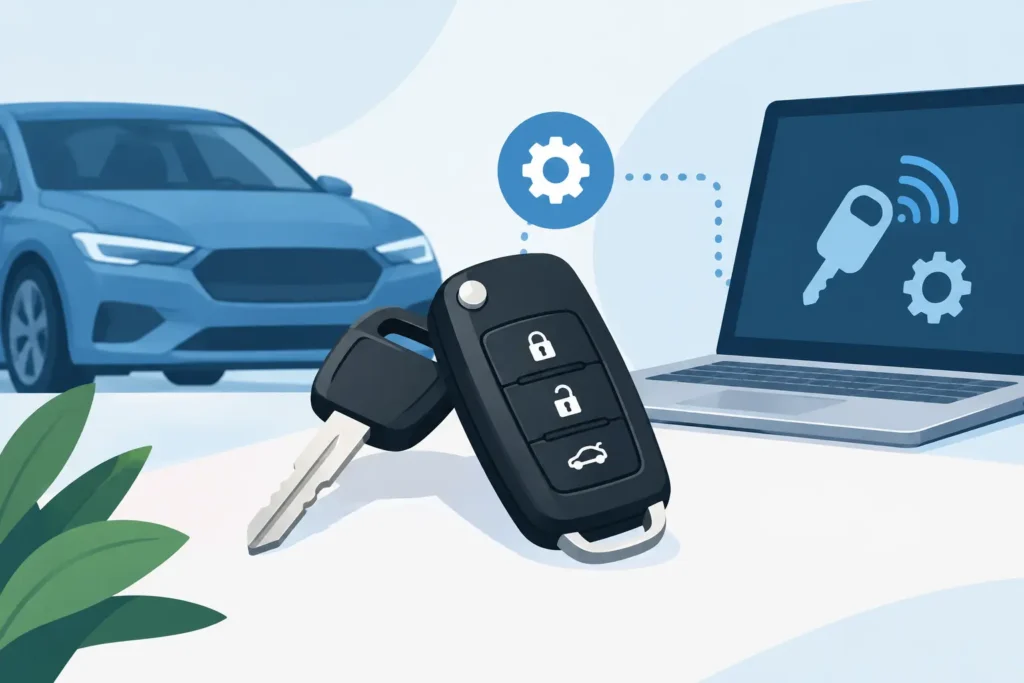
A replacement key that physically turns in the ignition is not always a key that will start the car. So, do replacement keys need coding? For many modern vehicles, yes. The metal blade may need cutting to match the locks, but the electronic part of the key often needs programming before the immobiliser will allow the engine to run.
That distinction matters when you are stranded at home, outside work or at the roadside. Buying a cheap key online can look like a quick fix, only to leave you with a key that opens the door but does nothing when you try to start the vehicle. Don’t panic. A mobile automotive locksmith can identify the key type, cut the blade and programme the correct replacement at your location.
Do replacement keys need coding on every car?
No. It depends on the age of the vehicle and the type of key system it uses.
Older cars with a plain mechanical key generally only need the blade cut correctly. There is no electronic chip inside the key and no immobiliser communication to programme. If the replacement has been cut from an existing working key or accurate key data, it should operate the doors and ignition straight away.
Most cars built from the late 1990s onwards use some form of immobiliser security. These vehicles commonly have a transponder chip hidden in the plastic head of the key. When you turn the ignition or bring a keyless fob into the vehicle, the car checks for the correct electronic identity. If it cannot detect an authorised chip, it may crank but will not start, or it may not respond at all.
Remote fobs and smart keys add another layer. The remote buttons may need synchronising or programming to operate central locking, while the transponder or smart-key system must be registered to start the engine. These are related jobs, but they are not always the same job.
Cutting and coding are different services
Key cutting creates the physical shape that matches your vehicle’s locks. Coding, also called programming, introduces the key’s electronic chip or fob to the vehicle’s security system.
A replacement key may need one, both or neither, depending on what has failed. For example, if your existing key casing has split but the circuit board and transponder still work, moving the components into a new casing may solve the issue without coding. If the blade has snapped but the electronics are intact, a new blade may be all that is needed. If the key has been lost, damaged beyond repair or has stopped communicating with the immobiliser, a fully cut and programmed replacement is usually required.
When a replacement key usually needs programming
Programming is normally needed when a vehicle uses a transponder key, remote fob, proximity key or keyless start system. This includes a large proportion of Ford, Vauxhall, Volkswagen, Audi, BMW, Mercedes-Benz, Nissan, Peugeot, Citroën, Renault, Toyota and other modern vehicles on UK roads.
It is particularly likely to be needed in these situations:
- You have lost all working keys.
- The engine starts briefly, then cuts out, or will not start with the replacement.
- The replacement key has a new transponder chip or electronic fob.
- You are adding a spare key to an immobiliser-equipped vehicle.
- Your keyless entry or push-button-start key has failed or gone missing.
- A second-hand fob has been bought and is still locked to another vehicle.
Not every fault means the key itself needs coding. A flat fob battery can stop remote locking from working, but it will not normally affect a traditional transponder chip. Equally, a damaged button, cracked casing or worn blade can often be repaired without replacing the full electronic key. A proper assessment avoids paying for programming when a simpler repair will get you moving again.
What happens during car key coding?
The process varies by make, model and year, but it should always start with confirming ownership and identifying the correct key specification. A professional automotive locksmith connects specialist diagnostic equipment to the vehicle, communicates with the relevant control modules and programmes an authorised key to the immobiliser system.
On some vehicles, the procedure is relatively straightforward when one working key is available. On others, especially if every key is lost, the technician may need to retrieve security information, access the vehicle without damage and programme a new key from the vehicle’s systems. Smart keys and newer models can involve more advanced diagnostic work and manufacturer security procedures.
This is why a universal key and a generic code reader are not reliable answers. The replacement must have the correct chip type, frequency, blade profile and software compatibility for the vehicle. Using the wrong fob can waste time and money, and poor-quality copying can create intermittent starting or remote-locking faults.
Can coding erase your existing keys?
It can, if the work is carried out incorrectly or the vehicle requires all keys to be present during programming. Some cars remove keys from memory as part of the programming procedure. Others allow an additional key to be added without affecting the originals.
Tell the locksmith how many keys you currently have and bring every working key to the vehicle where possible. This gives the technician the best chance of preserving your existing keys and checking that each one still starts the car before the job is complete.
Can you programme a replacement key yourself?
A few older vehicles allow limited remote synchronisation using a sequence of ignition and button presses. Instructions for this are sometimes found in the vehicle handbook. However, synchronising remote locking is not the same as programming an immobiliser chip.
For most modern cars, DIY programming is impractical without the correct equipment, security access and compatible key. Online guides can also be misleading because the procedure may differ between model years, engine variants and key systems. Trying repeated programming attempts with an unknown fob can leave you no further forward, particularly when the original key is already lost.
There is also a security reason for the restrictions. Manufacturers design immobiliser systems to prevent unauthorised keys from being added to a vehicle. A professional locksmith uses legitimate diagnostic methods, verifies vehicle ownership and works within the relevant manufacturer security requirements.
Is a dealer the only option for a coded replacement key?
No. Main dealers can supply and programme keys, but this often means arranging recovery or transport if the car cannot be driven, waiting for an appointment and taking time out of your day. It may be the right route for certain very new, specialist or unusual models, but it is not the only route for most drivers.
A capable mobile automotive locksmith can come to your home, workplace, car park or roadside location. With mobile key-cutting equipment, vehicle diagnostics and the appropriate key stock, the work can often be completed on the first visit. That is especially useful when you have lost your only key, need a spare before the remaining key fails, or cannot leave a van, family car or work vehicle off the road.
At Prestige Line LTD, vehicle entry, replacement-key cutting and programming can be carried out on site across Doncaster and the surrounding South Yorkshire area. The aim is simple: deal with the actual fault, protect the vehicle from damage and get you back behind the wheel without an unnecessary dealer trip.
What to do if your replacement key will not start the car
First, check whether the key is the right type for the vehicle. A key that turns but does not start the engine is often missing a programmed transponder, or the chip has been damaged or fitted in the wrong position inside a replacement casing.
If the remote buttons have stopped working, try a fresh quality battery before assuming the key needs replacing. Check the battery contacts for corrosion and make sure the casing closes firmly. If the car displays an immobiliser warning, a key symbol, or a message saying the key is not detected, avoid forcing the issue with repeated start attempts. These signs point to an electronic recognition problem that needs proper diagnostics.
Keep any remaining keys safe and separate. If you have one working key, arranging a spare now is usually easier and less disruptive than waiting until it is lost, broken or locked inside the vehicle. If you have no working key at all, have proof of ownership ready and call for assistance. The right replacement is not just a piece of cut metal – it is the key that gets your day moving again.